
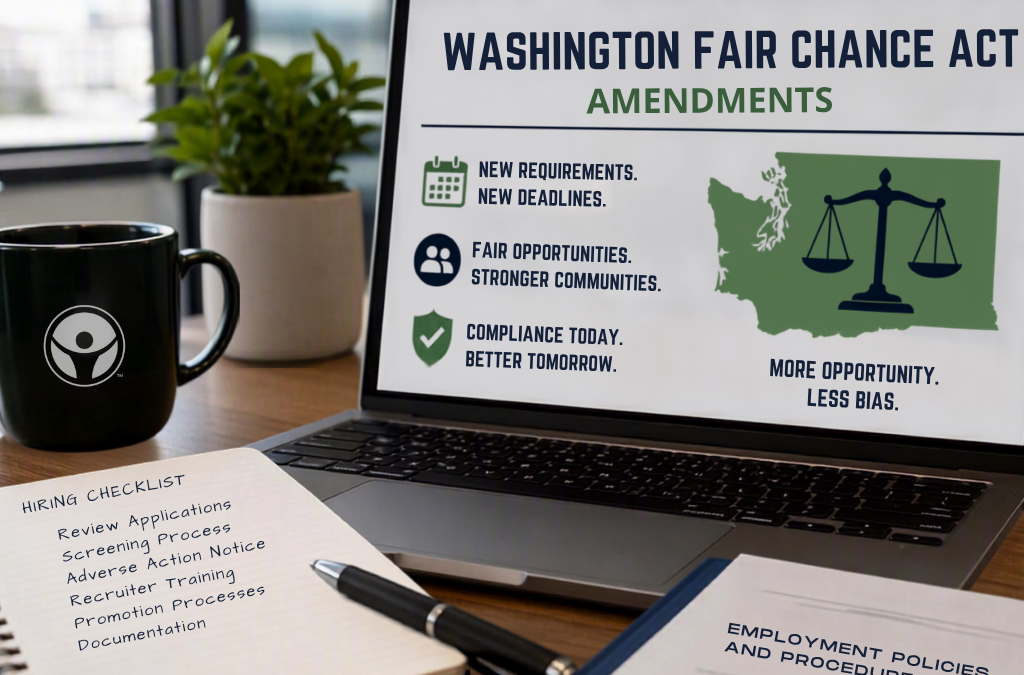
Ohhhh Washington. Forever the “hold my coffee” state on employment law, and this is no different. In staying true to this stereotype, Washington is making significant changes to the Fair Chance Act after similar occurrences happened in CA. Buckle up because we need you to read this through and probably make changes to your recruitment/hiring processes.
While many of these updates align with the best practices we’ve been recommending for years, there are some major changes that employers, recruiters, hiring managers, and HR professionals need to be aware of. The amendments substantially expand employer obligations, increase enforcement, and create new compliance risks for organizations that have not updated their hiring processes. Simply put, this is no longer just a “ban the box” conversation. It is a compliance issue that deserves attention before the law takes effect.
A Quick Refresher: What Is the Fair Chance Act?
Washington’s Fair Chance Act was originally enacted to ensure individuals with criminal records have a fair opportunity to compete for employment. Employers have generally been prohibited from asking about criminal history before determining whether an applicant is otherwise qualified for a position.
The amended law expands those protections and introduces new requirements that many employers will need to adjust their hiring processes to accommodate.
The amendments take effect:
- July 1, 2026 for employers with 15 or more employees.
- January 1, 2027 for employers with fewer than 15 employees.
New Notification Requirements
One of the updates I see catching employers off guard is what happens when a candidate voluntarily discloses a conviction.
Historically, many recruiters would simply continue the conversation and move on. Under the amended law, if an applicant voluntarily shares criminal history before a conditional offer, employers must provide notice regarding the Fair Chance Act and direct applicants to the Attorney General’s Fair Chance Act guidance.
This means recruiters need to know exactly what to do when a candidate says:
“I just want you to know I have a felony.” The recruiter should not begin asking questions about the conviction and should not make any hiring decisions based on that information. Instead, they should provide the required notice and continue evaluating the candidate based on qualifications, skills, and experience. If you haven’t trained your recruiting team on how to respond to these conversations, now is the time.
Conditional Offer First
Under the amended law, employers generally must wait until after extending a conditional offer of employment before conducting criminal background checks or seeking criminal history information.
This isn’t a major adjustment for many of our clients because it has been part of our best practice recommendations for years. However, if your organization is still conducting criminal background reviews earlier in the hiring process, you will need to redesign your recruitment workflows, application processes, interview guides, and background screening procedures.
The New Individualized Assessment Requirement
Employers can no longer rely on the existence of a conviction record alone when making employment decisions. The amended law prohibits policies that automatically disqualify applicants based solely on criminal history. Instead, employers must establish a legitimate business reason related to the specific position before taking adverse action based on an adult conviction record.
The conversation shifts from: “Does this person have a conviction?” to: “Does this conviction have a meaningful relationship to the duties, risks, and responsibilities of this specific position?”
This will require stronger documentation, more thoughtful decision-making, and greater consistency from hiring teams. Employers should be prepared to articulate and document why a particular conviction is relevant to a particular job.
New Notice Requirements Before Adverse Action
Another area likely to require process changes is adverse action.
Many employers currently rely on standard adverse action templates through their background screening provider and assume they are covered. The amended Fair Chance Act requires additional steps before denying employment, denying a promotion, or taking certain other adverse employment actions.
Generally, employers must:
- Identify the specific conviction at issue.
- Notify the individual.
- Give the individual an opportunity to respond.
- Allow the required waiting period before making a final decision.
If your organization currently follows a simple pre-adverse action/adverse action process through your screening vendor, now is the time to review that process and determine whether additional steps will be required.
Arrest Records and Juvenile Records Face New Restrictions
The amended Fair Chance Act also limits what information employers can rely upon.
Employers generally may not reject applicants or take adverse action based on:
- Juvenile conviction records.
- Arrest records that did not result in conviction.
- Most pending arrest information, with limited exceptions involving adults who are out on bail or released pending trial.
This means organizations should review both their internal hiring practices and any decision matrices used by recruiters or hiring managers to ensure prohibited information is not influencing employment decisions.
Don’t Forget Existing Employees
One of the more overlooked aspects of the amendments is that they aren’t limited to applicants. The law now extends protections to certain employment decisions involving current employees, including promotions and other employment-related actions. Many organizations are focused on updating recruiting procedures but may overlook internal movement and promotion processes. Employers should be reviewing both.
The Cost of Getting It Wrong Just Got More Expensive
Perhaps the biggest reason employers should be paying attention is that the amendments add significantly stronger enforcement provisions. An applicant or employee who believes an employer violated the law may file a complaint with the Washington Attorney General’s Office. The Attorney General has authority to investigate complaints and pursue penalties against employers that fail to comply.
The potential penalties have increased substantially:
- Up to $1,500 for a first violation.
- Up to $3,000 for a second violation.
- Up to $15,000 for each subsequent violation.
Also new, is that the penalty will be paid to the candidate if the violation finds a specific person is affected. Otherwise, the penalty will be retained by the Attorney General’s office.
Even more concerning, violations can add up quickly. If an employer has a flawed recruiting practice affecting multiple applicants, each affected applicant could potentially represent a separate violation.
Final Thoughts
While many of these changes mirror best practices that forward-thinking employers have already adopted, the consequences for noncompliance are growing significantly.
Now is the time to:
- Review employment applications.
- Audit recruiting and screening practices.
- Update adverse action procedures.
- Train recruiters and hiring managers.
- Review promotion and internal hiring processes.
- Ensure everyone involved in hiring understands the new requirements and knows what to do when criminal history issues arise.
This is also a great opportunity to revisit interview question compliance. A quick review of your hiring practices today can help prevent costly mistakes tomorrow. As Washington continues to expand Fair Chance protections, employers who proactively prepare will be in a much stronger position than those waiting until a complaint lands on their doorstep.
If you would like assistance in preparing your company to manage these new requirements and a written procedure to follow, our consultants are available to help. Contact your consultant or email hrhelp@jbconsultingsystems.com .