
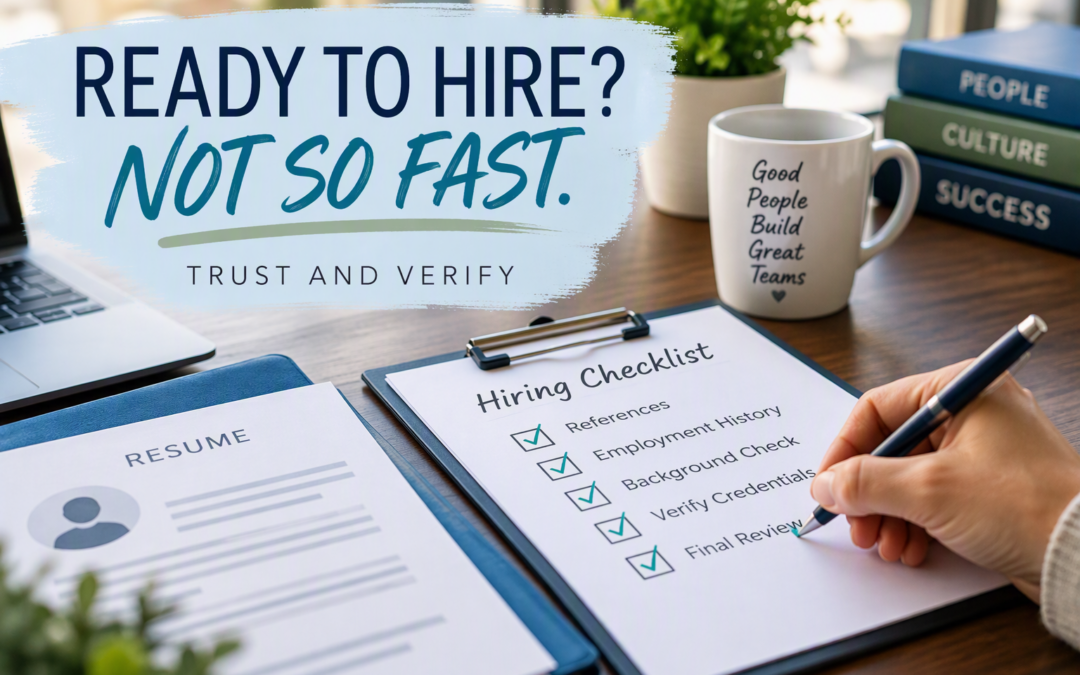
Your company has found a great candidate, and you’re ready to present an offer letter.
Hooray!
While this is an exciting moment in the hiring process, there are still a few important steps to consider before the confetti falls.
A thorough pre employment screening process can help employers verify candidate information, identify potential concerns, and make more informed hiring decisions. Depending on the position and applicable laws, that process may include reference checks, employment verification, background screening, or other job related checks.
The goal isn’t to approach every candidate with suspicion.
It’s simply to trust and verify.
References Still Matter
In today’s hiring environment, reference checks sometimes get skipped because of time constraints. Unfortunately, we still see this happen far too often.
Ideally, reference checks are completed before an offer is extended. However, scheduling challenges and business needs don’t always make that practical.
We also hear employers say that references provide little value because candidates will only list people who will speak positively about them.
In reality, that isn’t always the case.
A well conducted reference check can provide valuable insight into a candidate’s work style, strengths, reliability, and past performance. In addition, the conversation may help employers identify areas that deserve further discussion before employment begins.
Whether references are checked before an offer or at an appropriate later stage, consistency is important.
A thoughtful reference check can provide another piece of information to support a well informed hiring decision.
Verify Employment History
Employment verification can also be an important part of the employee screening process.
For example, employers may seek to verify appropriate information provided by a candidate, such as:
- Dates of employment
- Positions held
- Eligibility for rehire, when available
- Other relevant employment information the previous employer is permitted and willing to provide
Occasionally, differences appear between a candidate’s resume and a previous employer’s records.
Some discrepancies may simply be mistakes. However, others may warrant a conversation with the candidate before the hiring process moves forward.
The goal isn’t to disqualify candidates unnecessarily. Instead, it’s to confirm relevant information and promote accuracy throughout the hiring process.
Understand the Rules for Employment Background Checks
Depending on the position, an employer may decide that an employment background check is appropriate.
However, this is an area where employers need to proceed carefully.
When an employer obtains a background report from a company that compiles background information, the Fair Credit Reporting Act (FCRA) applies. Among other requirements, employers generally must provide the applicant with a clear written disclosure and obtain written authorization before obtaining the report. Additional requirements apply if information from the report may lead to an adverse employment decision.
Employers also need to consider federal nondiscrimination requirements when using background information in employment decisions. In addition, state and local laws may place further restrictions on what information employers can request and when they can request it.
Therefore, employers should understand the requirements that apply to their organization and location before conducting or using background checks.
Get the Right Candidate Authorization
Authorization is another important part of the screening process.
However, not every type of screening should be handled through a single paragraph in an employment application.
For example, when an employer uses a third party background reporting company, federal law requires specific disclosure and authorization procedures. The Federal Trade Commission states that the disclosure that a background report may be obtained must be provided in a clear and conspicuous written document, and the employer must obtain written permission.
Depending on the screening being performed and applicable law, employers may need appropriate documentation to:
- Contact professional references
- Verify employment history
- Confirm educational credentials
- Obtain a background report
- Conduct other legally permissible, job related screening
As a result, employers should make sure their hiring forms and screening procedures are current and appropriate for the checks being conducted.
Consistency Matters
A good screening process isn’t just thorough. It should also be consistent.
Employers should avoid applying different background screening standards based on protected characteristics. Federal equal employment opportunity laws apply to the use of background information in employment decisions.
Criminal history information also requires careful consideration. The EEOC advises employers to consider how criminal history relates to the risks and responsibilities of the particular job. Relevant considerations can include the nature of the offense, the time that has passed, and the nature of the position.
In short, screening decisions should be thoughtful, relevant, and consistent.
Thoroughness Can Reduce Hiring Risk
Hiring an employee requires a significant investment of time and resources.
Recruiting takes time. So does onboarding, training, and developing a new employee.
As a result, a hiring decision that doesn’t work out can be costly and disruptive.
A thoughtful screening process can help employers:
- Identify inconsistencies early
- Confirm relevant qualifications
- Gather additional information before making a decision
- Make more informed hiring decisions
- Protect company time and resources
Simply put, a little due diligence before a new employee starts can save significant time and frustration later.
Make Screening Part of Your Hiring Process
Candidate screening shouldn’t automatically be viewed as a lack of trust.
Instead, think of it as a professional step in a well designed hiring process.
Resumes, interviews, references, and screening each provide different information. Together, they can give employers a more complete picture before making a final hiring decision.
Most importantly, establishing a consistent hiring and screening process helps managers know what steps to follow for each candidate.
Trust your hiring instincts.
Then verify the information that matters.
JB Consulting Systems Can Help
The hiring process involves more than finding someone who looks great on paper.
JB Consulting Systems can help employers develop practical hiring processes, appropriate forms, and consistent procedures that support better hiring decisions and help organizations navigate HR compliance requirements.
A little extra diligence today can save significant time, money, and frustration down the road.
Need help strengthening your hiring process? Contact JB Consulting Systems to learn how we can help.