
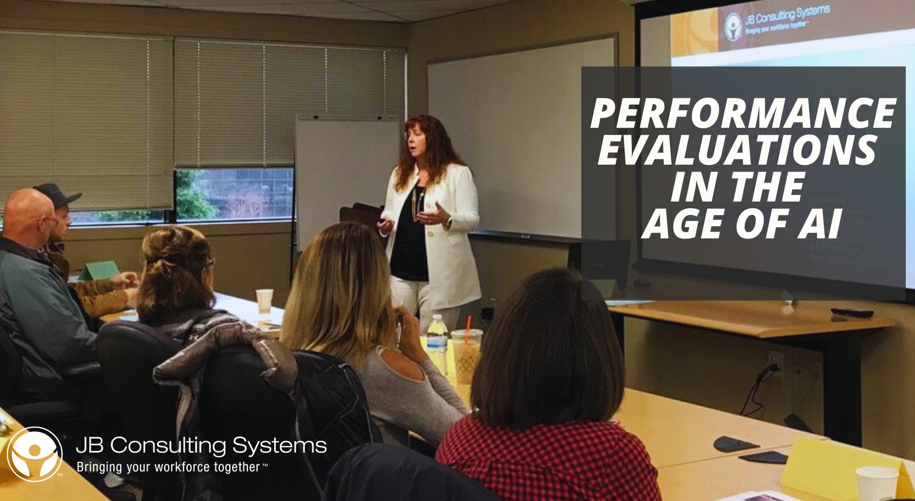
I recently had the opportunity to present in the Professional Women in Building headquarters during the NAHB International Builders Show in Orlando, Florida. There was a large interest in “all things” AI at the show and a need to understand how AI fits in construction. Here is a recap of my presentation.
Artificial intelligence is becoming a normal part of daily work across the residential construction industry—whether employees are using AI to help draft customer communications, summarize safety logs, assist with estimating, or reduce time spent on administrative tasks. As these tools become more common, one question keeps coming up:
How do we fairly evaluate performance when AI is helping produce the work?
The good news: AI doesn’t make performance evaluations harder. You will still want to approach the evaluations with an eye on performance. What changes is how we define “good work” and how clearly communicate expectations around responsible use of AI.
Whether your company uses annual performance evaluations or regularly evaluate employee performance, the approach is the same. Here are some practical tips for both e practical both employees and employers to keep evaluations accurate, fair, and up to date.
Why AI Changes the Evaluation Conversation
AI tools can speed up tasks, improve accuracy, and reduce paperwork—but they also blur the line between what the employee creates and AI assistance. In construction, where safety, compliance, communication clarity, and documentation accuracy matter, that line really matters.
A fair evaluation should measure:
- The employee’s judgment, not the AI’s guess
- How well they verify accuracy, not how fast the tool works
- Their professionalism and communication, not the phrasing an AI suggests
- Contribution, accountability, and safety-minded decisions, regardless of tools used
AI should enhance job performance—not overshadow it.
Employee Tips: Using AI the Right Way
AI can make work easier, but it doesn’t remove personal responsibility. Employees who use AI well stand out for the right reasons—because they combine technology with solid judgment.
- Use AI as a helper, not a replacement
AI can draft, check, or organize information, but you should still make the decisions. Your experience matters most.
- Always double-check accuracy
AI can be wrong—especially with numbers, building terminology, or safety details.
A quick review protects you, your company, and the customer.
- Protect sensitive jobsite and customer information
Never enter confidential data into unapproved tools. Construction documents often contain private details such as trade secrets, client names, and addresses.
- Be transparent when AI assisted your work
Honesty builds trust and avoids confusion.
Transparency also helps your manager evaluate your contributions accurately.
- Keep your underlying skills sharp as well as your AI Skills
If you rely too heavily on AI, your independent judgment may weaken. AI is a tool—not your replacement for professional competence.
Employer Tips for Fair & Consistent Evaluations
Leaders set the tone for how AI fits into the workplace. When expectations are clear, employees feel empowered, not monitored.
- Review your Job Descriptions
Ad expectations and core competencies. These will be different for each role.
- Define where AI is acceptable, optional, required, or prohibited
Examples:
- Allowed: drafting emails, summarizing safety notes
- Not allowed: final pricing, code interpretation, safety risk decisions
Clear guardrails prevent misuse and confusion.
- Evaluate the employee—not the AI output
Instead of rewarding speed alone, evaluate the skill behind the work:
- Did they verify AI outputs?
- Did they use AI ethically and safely?
- Did they apply good judgment?
- Train employees rather than penalize them
Not everyone adopts new tools at the same pace. There may not be a need for a carpenter to use AI right away. Provide training and practice opportunities before making AI competency a performance factor.
- Maintain consistent evaluation criteria across roles and managers
AI shouldn’t create unintentional favoritism. Ensure all supervisors understand the same expectations.
- Incorporate AI competency into development—not punishment
Example:
Beginner: Uses AI for simple tasks
Competent: Integrates AI into regular workflow
Advanced: Improves processes using AI
Think of AI skills like any other workplace technology: something to learn, improve, and master over time.
The Bottom Line
AI is changing how work gets done—but it doesn’t change what matters most. Good performance still comes down to:
- Judgment
- Accountability
- Communication
- Skill
- Professionalism
- Safety-minded decisions
With clear expectations and thoughtful evaluation criteria, AI becomes a tool that elevates everyone—not something that complicates or distorts performance reviews.